 Yes, Please Write That Review
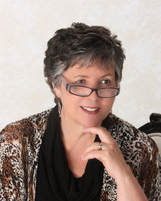
By Guest Blogger Brenda Remmes Kindle Unlimited has a nifty little pop-up that comes at the end of any book you read which asks how you liked the book. On a five star rating with one being “not at all” to five being “excellent read,” all you have to do is click a button. Then it asks you to write a comment…not a thesis, just a comment. If you happen to have a hard copy of that book, unfortunately, you don’t get a similar reminder. Instead you have to make the effort to go into Amazon books and under the title of the book scroll down to the Reviews section and click “Write a customer review.” Too much trouble? Please reconsider. If you happened to like the book, please take the time to do it. It means a lot to the author. If you didn’t like it, I suggest you ignore the process. That’s the author in me speaking. Why? Here’s why. Marketing books is a major factor in selling books. Selling books online includes getting connected into the algorithms that are computerized to advertise the book by attaching it to other popular books of a similar genre. “Customers who read this book might also like….” Every author wants to have their book cover get viewed as frequently as possible. There are numerous estimates of how many reviews a book has to get in order to get kicked into the algorithm advertising. I’ve been told fifty, seventy-five, and a hundred. What matters is not as much what you say, although compliments are always appreciated, but the overall average the book gets in the reviews. Anything below four or five stars is not good. After every book I read and enjoy, I write a review. My reviews are simple—two or three sentences. Books I choose to write reviews for are all four or five stars. If I can’t give the book at least that, I don’t write a review at all. I know it takes a lot of work to write and publish a book, and I respect every author who manages to do so. Just because I didn’t like the book, doesn’t mean that someone else won’t. We all have certain genres that we prefer. I think it’s unfair for me to judge the quality of genres I rarely read unless the book has unexpectedly captivated me. A low rating on a book brings down the overall average, and many publishers look at how the books were rated by previous readers plus how many books were sold when determining whether or not to publish the author’s next book. It takes a lot of fives to upgrade an average after someone throws a one into the mix. Be gentle. Be kind. As my mother taught me, if you can’t say something nice, don’t say anything at all. But by all means, if you enjoyed what you read, give the author a pat on the back and take a few minutes to tell them in a review. They notice, I promise. Brenda Remmes is the author of the bestselling novel The Quaker Café and two other Quaker Café novels titled Home to Cedar Branch and her most recent release, Mama Sadie which is a Next Generation Indie Book Award finalist. Her stories and articles have appeared in Newsweek as well as southern publications and journals. She currently lives with her husband in an old family home near the Black River Swamp in South Carolina. Learn more about Brenda and her books at https://brendaremmes.
2 Comments
Not long ago, my dear friend Sherry paid me one of the highest compliments I’ve ever received. She called me her “Barnabas.” In its Greek origins, the name means “the encourager,” and taken from the Biblical book of Acts (4:36), the word translates as “son of encouragement,” or in a linear translation, it roughly describes “calling people closer together and giving stronger comfort.” The Hebrew word translates to “son of exhortation” or “son of comfort.” I love any of the meanings and am truly humbled that my friend thinks that of me.
I first met Sherry many years ago when she registered for a fiction writing workshop I taught at our local university. She and four other members from that group stood out above all the rest in terms of their writing. I was amazed, ecstatic, awed, and excited for each of them as they fine-tuned and perfected their already incredible stories. It’s not often we come across that many exceptional writers in a random group of workshop participants. Over the years, Sherry and Peg, another member of that same workshop, became treasured friends and writing pals. We now have a close, supportive critique group that has proven beyond any doubt how valuable it is to have knowledgeable and committed members who care about one another’s goals. I know, and have heard other writers (even very famous ones) state the same,: that support and caring can be rare in some writing circles. I’ve never understood why that is, but I am certainly not the only writer who has run up against the self-centeredness and competiveness so often at the heart of artists. It’s almost as if some writers fear that if they share information or knowledge or contacts that in some way, their own access to that will be denied them. But if our work as artists is professional, good, and marketable, why and how does helping others damage our own opportunities? I don’t get it. I have made it a conscious practice to share information on workshops, agents, publishers’ “want lists,” contests, marketing tools, venues for promotion, and any other helpful and encouraging information with any author I’ve made contact with and who might be able to use the information. But so many writers do not reciprocate or pay it forward. As long as their books are selling, as long as they have an agent, a publisher, or know of a contest or marketing venue for their own books, they keep that info tightly held. Again, I don’t get it. Those kinds of writers are takers. They are not givers, not supporters, not encouragers, not comforters. They are not Barnabasses (not sure that’s a real word, ha!) And they are not the kinds of authors with whom we need to associate. I urge each of you to search your own vast knowledge of the writing craft and business. Share contacts, contest info, publishing opportunities, agent names, and marketing venues. Write reviews of their books on all available sites. Give books as gifts. Recommend good reads to your friends. Most of all, offer encouragement to new writers. We all have something we can share, something we can pay forward. Share with others who may or may not be able to help you, but who one day may remember the helping hand you offered and offer theirs to another. Please be a Barnabas. Thanks, Sandy I've just finished typing up my highlighted passages from Pat Conroy's book My Reading Life. I have not doubt that I will return to read again and again some of these words, to be inspired, comforted, and encouraged by them.
I don't want to share too much of the book. But I want to share a few lines with you now before I leave Conroy and move on to completing a project of my own that is calling. I truly just hope that those of you who love books and/or writing will be encouraged from my post to read the book. First: a week or so ago, I trolled Facebook in the wee hours and came across a photograph of a beautiful lacquered vase that had lines of gold criss-crossing the body of the vessel. I read that the vase was an example of the "Japanese practice of repairing ceramics with gold-laced lacquer to illuminate the breakage.” I found the piece breathtaking. Later when I returned to Conroy's book, I came across this passage: "kintsugi is the Japanese practice of repairing ceramics with gold-laced lacquer to illuminate the breakage.” ..not attempt to hide the breakage... though I have always known that pain was a ham-fisted player in my novels, I didn’t understand that I had used the radiant lacquers of the language to mark the wounds and fissures I had forced upon my characters. …I never knew I practiced the subtle art of kintsugi until Thomas Meyer let me in on the secret. " And yes. Isn't that just what many of us writers dream of doing--illuminate the breakage? Turn the pain into something beautiful and breathtaking? Second: As I completed the notes from the book, I came upon this...stayed with it, even shed a tear over it. " I’ve always wanted to write a letter to the boy I once was, lost and dismayed in the plainsong of a childhood he found all but unbearable. But I soon discovered that I’ve been writing voluptuous hymns to that boy my whole life, because somewhere along the line—in the midst of breakdowns, disorder, and a malignant attraction to mayhem that’s a home place for the beaten child—I fell in love with that kid. I saw the many disguises that boy used to ward off solitude, hallucination, madness itself. I believe that the reading of great books saved his life. " That's all for now. Sandy I have just completed a studied reading of Pat Conroy’s book My Reading Life, and I find myself in need of friends to talk with about it. I am not yet sure of all I want to say about the book, but for now, I need to express this:
I very much loved Conroy’s earlier work: The Water is Wide, The Prince of Tides. I found myself less infatuated with those books that followed, and part of that reaction, I think, was that after meeting him personally/professionally a few times, I was not comfortable around the man. I found him a bit too much (in terms of his public persona) But after reading this book, I find there was much more to the man than I found evident on the surface. We do often miss the undercurrents and the deeper intentions and motivations of a person because we are blinded and put-off immediately by what is on the surface. (I have trusted first impressions my whole life, and while mostly those have proven accurate, I do recognize and admit that we sometimes need to take a second look.) I only wish I had in this case. I am now certain Conroy and I could have spent hours long into the days and nights discussing mutually shared opinions and insights about books and writing. We might could have been grand friends. And that is my loss. But, lesson noted and learned. So, here’s some of what I found on the pages of My Reading Life: * a beauty and passion in his language when discussing books and the people who helped bring him to books and writing, * an overwhelming desire to learn--no, to gobble-up--all the good books of the world and to be like those writers. (No matter that I disagree with some of his favorite writers and books, I share this same passion). * I found him to be self-honest in a way that surprised me—aware of his public impressions on people. He recognized and admitted his faults as a human being, as well as his particular writing short-comings. (And shouldn’t we all be so aware?) * I found him completely in love with and devoted to those people who had mentored and helped him along the way and of the same opinion as I about the dangerous elitism some writers develop, their selfishness, their desire to compete, rather than support, to shut out, put down, or reject those that come after them. I was aware that Conroy had helped many other writers along the way get their starts. And I always felt good about that aspect of him, but to hear him validate my own observations of how rare that is was of particular comfort to me. I do not imagine this elitism, nor create it in my mind. It is real. It does exist. Sadly. *There is a certain under-tone to this book of Conroy’s that left me feeling a bit sad, yet comforted--sort of like the gloaming part of the day (my favorite time), when we know the day is ending lacking all we hoped to accomplish, yet still, there is the satisfaction of knowing that it was filled with what we could manage, and we are at peace with that and with the coming of the night, there is the promise of another day. I detected in this book, what I believe is, a complete but accepted regret in the man that he could not read all the wonderful literature in our world…there was simply no way…and that made him sad, yet he was so in love with what he had read, and that comforted him. He collected books the way I do…saving them, perhaps on the verge of hoarding them for fear that one day there might not be any to read. Books were his friends, his companions, his comfort, his joy, his security in a world where he often felt so alone. I sensed that most likely this was one of his greatest regrets on leaving this world: that he would not and could not read them all. I love that about him. So for now, I just need to say that I have found delight and comfort in this book. And I truly am grateful for having discovered the man beneath the public persona. I am sad I didn’t know the man beyond those few brief first impressions, sorry that I did not try to peer through that outer armor, and I am determined to go back and read or reread with a clearer eye and more open heart what I once rejected of his later writings. I’m certain I will be typing up pages of quotes from this book and will probably share those with some of you at some point or write about them in an essay or something. It’s what I do with what I read. It’s what I do when I am so moved, so touched. And finally, to Pat Conroy: I hope you’ve found a never-ending library in heaven. |
Archives
December 2018
Categories |
 RSS Feed